
Your privacy is important to us. This STU Personal Data Protection Policy sets out STU comply with the provisions of the Personal Data Protection Act 2012 of Singapore (“PDPA”).

We also want you to understand the way in which we collect, use, disclose and/ or retain your Personal Data. This Personal Data Protection Policy sets out:

1)   our policies on how we manage your Personal Data;

2)   the types of Personal Data we collect, use, disclose and/ or retain;

3)   how we collect, use, disclose and/ or retain your Personal Data; and

4)   the purpose(s) for which we collect, use, disclose and/ or retain your Personal Data.

You agree and consent to us, the Organisation, and our authorised service providers and third parties to collect, use and disclose and/ or retain your Personal Data in the manner set forth in this Personal Data Protection Policy.

This Personal Data Protection Policy supplements but does not supersede nor replace any other consent which you may have previously provided to us nor does it affect any right that we may have at law in connection with the collection, use, disclosure and/ or retention of your Personal Data.

From time to time, we may update this Personal Data Protection Policy to ensure that our Policy is consistent with developments and trends in the Labour Movement and/ or any regulatory changes. Should any revision(s) be made to this Personal Data Protection Policy, updates will be published on our public site. Subject to your legal rights in Singapore, the prevailing terms of the Personal Data Protection Policy shall apply.

This Personal Data Protection Policy forms a part of the terms and conditions governing your relationship with us and should be read in conjunction with such terms and conditions (“Terms and Conditions”). In the event of any inconsistency between the provisions of the Personal Data Protection Policy and the Terms and Conditions, the provisions of the Terms and Conditions shall prevail.

1.    Your Personal Data

1.1  In this Personal Data Protection Policy, “Personal Data” refers to any data and/or information about you from which you can be identified by, either (a) from that data; or (b) from that data and other information to which we may have legitimate access to. Examples of such Personal Data include but are not limited to:

  1. Your name, NRIC, passport or other identification number, telephone number(s), mailing address, email address and any other information relating to you which you have provided in any forms you may have submitted to use, or in other forms of interaction with you;
  2. Your photos;
  3. Your employment history, education background, and income levels;
  4. Personal Data of your family members, such as next of kin, spouses, and children;
  5. Information relating to payments, such as your bank account number or credit card information;
  6. Information about your usage of and interaction with our website and/ or services including computer and connection information, device capability, bandwidth, statistics on page views and traffic to and from our website

2.    Collection of your Personal Data

2.1  Generally, we may collect your Personal Data through the following ways:

  1. When you sign up with us for union membership;
  2. When you access our websites or perform an online transaction;
  3. When you interact with any of our employees, union officials of the Organisation and volunteers;
  4. When you submit an application to us for membership services and benefits;
  5. When you engage us for industrial relations services;
  6. When you respond to our request for additional Personal Data;
  7. When you ask to be included in an email or other mailing list;
  8. When you request that we contact you;
  9. When you respond to our initiatives or promotions; and
  10. When you submit your Personal Data to us for any other reason.

2.2  When you browse our website, you generally do so anonymously, but please see section 6 below on cookies.

3.    Purposes for the Collection, Use and Disclosure of Your Personal Data

3.1  Generally, we may collect, use, disclose and/ or retain your Personal Data for the following purposes:

  1. To manage your union membership including recruitment, processing and termination of your membership;
  2. To provide you with membership benefits and services;
  3. To provide you with employment and employability services;
  4. To provide you with industrial relations related services;
  5. To provide you with training;
  6. To assist you with your enquiries;
  7. To process payment for your union membership or any other purchases and subscriptions;
  8. To improve membership/ customer services, such as resolving complaints and handling requests and enquiries;
  9. To conduct research, surveys and interviews;
  10. To keep you updated on our events; and
  11. To comply with applicable laws and regulations.

4.    Marketing/Optional Purposes

4.1  From time to time, we may contact you via mail, electronic mail, telephone (call or SMS-Text), facsimile or social medial platforms, to inform you about our membership benefits, services and events that we think may be of interest to you.

4.2  You can let us know at any time if you no longer wish to receive marketing materials (by informing us through Consent to Marketing Messages) and we will remove your details from our direct marketing database.

4.3  Please note that we may still send you non-marketing messages such as surveys, customer-service notices and other service related notices.

5.    Disclosure of your Personal Data

5.1  We may disclose your Personal Data to the following group of external organisation for purposes mentioned above, subjected to the requirements of applicable laws:

  1. NTUC, other affiliated unions and associations and Ong Teng Cheong Labour Leadership Institute (OTCI);
  2. Labour Movement related organisations such as e2i, NTUC Social Enterprises and NTUC Club;
  3. Hospitals, clinics or insurance companies in connection with claims;
  4. Agents, contractors, data intermediaries or third party service providers who provide services, such as telecommunications, mailing, information technology, payment, payroll, data processing, training, market research, carding, storage and archival, to the Organisation;
  5. External banks, financial institutions, credit card companies and their respective service providers;
  6. Our professional advisers such as our auditors;
  7. Relevant government regulators, statutory boards or authorities or law enforcement agencies to comply with any laws, rules, guidelines and regulations or schemes imposed by any government authority;
  8. Third party reward, loyalty, privileges and co-branded programme providers;
  9. Business partners that provides any membership services and benefits; and
  10. Any other person in connection with the purposes set forth above.

6.    Use of Cookies

6.1  We may collect or analyse anonymised information from which individuals cannot be identified (“Aggregate Information”), such as number of users and their frequency of use, the number of page views (or page impressions) that occur on our websites and common entry and exit points into our websites.

6.2  We make use of “cookies” to store and track Aggregate Information about you when you enter our website(s). Such cookies are used to track information such as the number of users and their frequency of use, profiles of users and their online preferences.

6.3  Such aggregate Information collected may be used to assist us in analysing the usage of our website(s) so as to improve your online experience with us.

6.4  Should you wish to disable the cookies associated with these technologies you may do so by changing the setting on your browser. However, please note that this may affect the functionality of the website(s).

7.    Use of Cookies

7.1  Our website may contain links to other websites operated by third parties independent of the Organisation. We are not responsible for the privacy practices of such websites operated by third parties even though it is linked to our website(s).

7.2  We encourage you to learn about the privacy policies of such third party website(s) by checking the policy of each site you visit and contact its owner or operator if you have any concerns or questions.

8.    Protection of your Personal Data

8.1  We maintain appropriate security safeguards and practices to protect your Personal Data unauthorised access, collection, use, disclosure, copying, modification disposal or similar risks, in accordance with applicable laws.

9.    Accuracy of your Personal Data

9.1  We take all reasonable measures to ensure that your Personal Data remains accurate, complete and up-to-date.

9.2  You may also keep us informed when there are any updates to your Personal Data by contacting us directly.

10.   Withdrawal of Consent

10.1  If you wish to withdraw your consent to any use or disclosure of your Personal Data as set out in this Personal Data Protection Policy, you may contact us via stu@stu.org.sg.

10.2  Please note that if you withdraw your consent to any or all use or disclosure of your Personal Data, depending on the nature of your request, we may no longer be in a position to continue to provide membership benefits and services to you.

10.3  Such a withdrawal may therefore result in the termination of any membership that you may have with us.

11.   Access and Correction of your Personal Data

11.1  You may request access to or make corrections to your Personal Data records, but the Organisation has the right to charge a reasonable fee for processing your request.

11.2  Please submit your request to us by emailing our our Data Protection Office: stu@stu.org.sg

12.   Contacting Us

12.1  If you have any questions or complaints relating to the use or disclosure of your Personal Data, or if you wish to know more about our data protection policies and practices, please contact our Data Protection Office via email at stu@stu.org.sg


 

Session title

Facilitating Students’ Conceptual Understanding in Economics with Vibe Coding​

Track 1

The Helm: Teacher-Led Pedagogy & Learning Design

Synopsis

Students often memorise abstract diagrams and processes without fully understanding the economic reasoning that underpins them, leading to mechanistic reproduction and frequent errors. Our study explores vibe coding as a novel pedagogical approach to support students’ conceptual understanding behind diagram construction and cause-and-effect relationships in Economics. Vibe coding allows users to describe desired outcomes in natural language, which are translated by AI into code that generates interactive diagrams, charts, and simulations.

When performed by students, the iterative process of prompting and refining outputs requires repeated retrieval of content knowledge, articulation of economic thinking, and evaluation of output accuracy. This presentation will share pedagogical considerations for designing such AI-enabled learning experiences including the integration of Differentiated Instruction and Collaborative Learning to support diverse learners, while maintaining a balance between human cognition and AI assistance. These insights contribute to the growing body of pedagogical perspectives on the use of generative AI in education.

Session title

Human First, AI Second: Strengthening Teacher Relationships and Well-Being in an AI Era

Track 2

The Anchor: Relationships, Belonging & Wellbeing in an AI Age

Synopsis

Artificial Intelligence is rapidly reshaping the educational landscape, creating new opportunities to enhance teaching and learning while also presenting significant challenges for the teaching profession. This presentation explores how AI can be integrated into education in ways that strengthen, rather than diminish, the essential human elements of teaching. It examines the importance of teacher–student relationships, teacher well-being, and professional autonomy in an AI-driven era, while highlighting the need for ethical implementation of technology that supports educators instead of adding to their workload.

The presentation also discusses the role of teacher unions in advocating for human-centred AI policies and ensuring that innovation enhances educational quality without compromising the values, trust, empathy and human connections that remain at the heart of education.

Session title

The Engine Room of Teaching: Streamlining Workflows, Empowering Educators, and Sustaining AI Integration

Track 3

The Engine Room: Teacher Workflows, Professional Agency & AI Productivity

Synopsis

This presentation explores how the “engine room” of education, comprising the essential systems and processes that support teaching, can be strengthened through efficient workflows, empowered educators, and responsible Artificial Intelligence (AI) integration. It examines how repetitive administrative tasks, such as assessment, reporting, and documentation, can be streamlined using digitised systems, shared templates, and automation, enabling teachers to devote more time to meaningful teaching and professional growth.

The session also highlights the importance of teacher agency by encouraging educators to make informed decisions, adapt practices to learners’ needs, and foster innovation through greater autonomy. AI is presented as a valuable assistant that enhances productivity while complementing, rather than replacing, teachers’ professional judgement. Ethical considerations, including data privacy and digital literacy, remain central to its adoption. Supported by effective leadership and professional organisations, the integration of efficient systems, teacher empowerment, and sustainable AI use creates a balanced, resilient, and future-ready education ecosystem that prioritises both teacher well-being and student learning.

Session title

Agile Engines for Diverse Learners: Automating Lesson Preparation in Multicultural Primary Classrooms

Track 3

The Engine Room: Teacher Workflows, Professional Agency & AI Productivity

Synopsis

Lesson preparation for multicultural classrooms has become increasingly complex due to students’ diverse linguistic backgrounds and varying learning levels. This session introduces AI as an “Agile Engine” designed to navigate these educational challenges effectively.

The session will share practical cases of using AI to automate the creation of multilingual learning materials, differentiated worksheets, and customized feedback. By reducing the “engine room” workload, teachers can focus more on their core role: fostering emotional connections and building strong relationships with students. Ultimately, this session demonstrates how AI goes beyond being a simple tool to become a powerful engine that empowers teachers and makes the modern classroom more sustainable.

Session title

Who steers learning — teachers or technology?

Track 3

The Engine Room: Teacher Workflows, Professional Agency & AI Productivity

Synopsis

Amid the rapid integration of AI in education, a key question arises: Who steers learning—teachers or technology? This presentation argues that while AI can enhance teaching and learning, it is the teacher who defines learning goals, designs experiences, and safeguards pedagogical integrity.

Drawing on Chinese Language classrooms in Singapore, the session demonstrates a pedagogy-first approach to AI integration. AI is used selectively as a responsive scaffold to enhance feedback, personalise learning, and extend interaction.

Central to this approach are the roles of teachers-in-the-loop and teachers-over-the-loop. Teachers shape AI-mediated interactions while exercising professional judgement over when and how AI should be used.

Through classroom examples, the presentation shows how AI serves not as a replacement, but as a pedagogical partner under teacher control to amplify and transform teaching and learning. It invites educators to re-centre pedagogy and reaffirm their role as designers of learning in the age of AI.

Session title

Strengthening learning without weakening trust

Track 4

The Compass: Values, Ethics, Governance & Assessment Integrity

Synopsis

Our project demonstrates that AI can strengthen learning without weakening trust. By positioning teachers as designers, decision-makers, and assessors, AI talking avatars become structured practice tools — not autonomous evaluators. The model protects assessment integrity, prioritizes transparency, safeguards student privacy, and embeds ethical oversight into everyday classroom practice. It offers a practical blueprint for responsible, teacher-governed AI integration in an AI-enabled world.

We will also share how we use student onboarding session to explicitly teach how AI is being used in the classroom and why. Students are positioned not as passive users, but as accountable participants who must manage their own AI use responsibly.

Session title

Practical and adaptable ways of using AI- enabled tools to support revision, formative assessment and develop students’ metacognitive awareness in the writing process cycle

Track 4

The Compass: Values, Ethics, Governance & Assessment Integrity

Synopsis

Research suggests that writing development is supported by self-regulation and by students’ ability to understand and act on feedback. Graham and Harris (2000) highlight the role of self-regulation in writing,. Malecka, Boud, and Carless (2022) also emphasise the importance of helping students seek, process and act on feedback.

This session offers practical and adaptable ways of using AI-enabled tools to support revision, formative assessment and develop students’ metacognitive awareness in the writing process cycle. Using examples from MOE tools such as SALiS and other SLS AI-enabled features, the session keeps the teacher firmly at the centre as the designer of purposeful learning experiences and the guide to critical and ethical language use in the age of AI. Participants will leave with strategies that can be adapted across contexts to strengthen student reflection, agency and voice in their writing.

Session title

The Teacher’s Practical AI Toolkit

Track 1

The Helm: Teacher-Led Pedagogy & Learning Design

Synopsis

Teaching is one of the most demanding professions in the world. Behind every great lesson is hours of planning, writing, communicating, and documenting. This hands-on workshop is designed to give that time back to you.

In this session, you will discover how AI can become your most reliable behind-the-scenes partner, handling the administrative load so you can focus on what truly matters: your students.

Together, we will walk through four practical, real-world applications you can start using from day one:

  • Design Lesson Plans that are structured, curriculum-aligned, and ready to teach, in a fraction of the usual time.
  • Maintain Teachers’ E-Records with ease, creating organized, professional documentation that meets school standards without the paperwork stress.
  • Craft Parent Emails that are clear, warm, and professional, whether it is a progress update, a concern, or a celebration of your student’s growth.


Build Exam Papers at a professional level, complete with varied question types, mark schemes, and differentiation, all generated with your learning objectives in mind.

By the end of this workshop, you will not just understand AI. You will know how to command it. You remain the professional. AI simply carries the load.

Session title

Scaling Insights, Not Just Grades AI-Powered Marking as a Catalyst for Teacher Agency

Track 3

The Engine Room: Teacher Workflows, Professional Agency & AI Productivity

Synopsis

The most expensive bottleneck in any teacher’s week is not curriculum planning or lesson delivery. It is the feedback lag: the gap between when a student submits work and when they receive actionable guidance. For subjects spanning STEM and Humanities, where structured problem sets and extended written response both demand significant teacher time, this lag compounds across cohorts and assessment cycles into a systemic problem.

This session moves past surface-level discourse on AI in education. Rather than exploring content generation or chatbot tutors, it enters the engine room of the assessment lifecycle: examining how AI-powered marking and analytics platforms can compress the feedback loop, surface learning data at scale, and return to teachers the one resource no technology can manufacture: time.

Session title

Practitioner-grounded model of teacher-led AI innovation drawn from authentic Classroom Implementation

Track 3

The Engine Room: Teacher Workflows, Professional Agency & AI Productivity & Track 1 — The Helm: Teacher-Led Pedagogy & Learning Design

Synopsis

As Artificial Intelligence becomes increasingly embedded in education systems, the key question is no longer whether teachers should use AI but how teachers can lead its use meaningfully, sustainably and ethically. This session presents a practitioner-grounded model of teacher-led AI innovation drawn from authentic classroom implementation. Participants will explore how AI tools can transform teacher workflows — from lesson design and differentiated feedback to student data analysis and assessment creation — while strengthening professional judgement and pedagogical intentionality.

Through real case studies involving AI-supported inquiry learning, adaptive feedback in national learning platforms, generative simulation design, and sustainability STEM projects, the session demonstrates how AI can free teachers from routine cognitive load and redirect effort towards higher-impact work such as building relationships, diagnosing misconceptions, and deepening student thinking.

Participants will experience practical frameworks that help teachers decide when AI adds value and when human expertise must take precedence. The session reframes AI not as a shortcut but as a professional amplifier that enables teachers to remain firmly at the helm of learning.

Session title

Deep Dive: Gemini for Education

Track 3

The Engine Room: Teacher Workflows, Professional Agency & AI Productivity

Synopsis

This session offers a focused exploration of emerging AI technologies from Google, with particular emphasis on Gemini and NotebookLM, and their practical applications within the Ministry of Education (MOE) context.

Participants will gain insights into how these tools can be meaningfully integrated into educators’ daily workflows to enhance productivity, streamline administrative tasks, and support more effective lesson design. Through guided demonstrations, the session will illustrate how Gemini can assist in content generation, ideation, and differentiation, while NotebookLM can be leveraged for knowledge synthesis, resource organisation, and research-informed teaching.

Beyond technical capabilities, the session will also highlight how AI can augment — rather than replace — teacher professional judgement, reinforcing the role of educators as designers of learning experiences.

Realistic use cases will be shared to demonstrate how these tools can positively impact both teaching practices and student learning outcomes.

By the end of the session, participants will walk away with practical strategies and actionable ideas to responsibly and effectively harness AI in their educational settings.

Jayaram Saravanakumar Naidu

Jayaram Saravanakumar Naidu is a Deputy Year Head at Northland Primary School, Singapore, and teaches Primary Science and Mathematics. He is passionate about creating student-centred learning experiences that develop curiosity, critical thinking, and creativity. He has led the school’s MakerSpace programme, designing hands-on learning experiences and supporting the school’s Applied Learning Programme (ALP). In partnership with the Singapore University of Technology and Design, he helped implement the Smorphi Robotics programme to support a school-wide simplified Design Thinking approach, enabling students to solve authentic problems through engineering and innovation. His professional interests include inquiry-based learning, artificial intelligence in education, and teacher professional learning. He is also an advocate for systems thinking, believing that sustainable improvement comes from designing ecosystems that support both teacher growth and student well-being.

Session title

Lesson Study on Teacher-Led AI-Supported Learning of Adaptations

Track 1

The Helm: Teacher-Led Pedagogy & Learning Design

Synopsis


This lesson study examined how intentional teacher-designed use of AI tools can deepen Primary 6 students’ understanding of adaptations in living organisms. The focus remained on helping students explain how structural and behavioural adaptations support survival, rather than memorising facts.

Session title

Teacher as a Learning Architect

Track 1

The Helm: Teacher-Led Pedagogy & Learning Design

Synopsis

The Teacher as a Learning Architect is a practical session for Southeast Asian educators who teach with AI tools. Let us explore a simple idea: teachers choose the destination — learning goals, values, and assessments — while AI helps build the road—drafting materials, organising information, and offering options to differentiate.

You will learn how to:

1. Define clear outcomes (using backward design and A SMART goals)

2. Design inclusive learning experiences (using UDL scaffolds), and

3. Decide when and how AI tools can help: safely, ethically, and in culturally appropriate ways.

You will be equipped with ready to use templates and a checklist to keep you firmly in the driver’s seat.

Session title

Imagining the future of the classroom

Track 2

The Anchor: Relationships, Belonging & Wellbeing in an AI Age

Synopsis

Imagine the future of the classroom, where teachers & students journey into imaginative worlds shaped by their diverse inputs, and brought to life through a strategic arsenal of GenAI tools, operating smoothly at speed and with almost no cost. The teacher steers control of the tools, ensuring ethical and responsible use amidst varied student suggestions.

As students have their voices heard and translated into multi-modal outputs, engagement is only heightened and personalised as everyone contributes building their stories and worlds together. The student-teacher bond develops naturally in the process.

By the end of the workshop, you will walk away with:

✅ A blueprint of bots primed to curate your specific lesson content in real-time, in minutes!

✅ More classroom time to impart the skills our students really need for the future: Critical discernment & Creative strategy!

✅ A system to track, in detail, the unique qualities and growth timeline of every student!

All these can be implemented into your classroom the next day!

The GenAI opportunity for educators is here! Seize it to command you more attention span and respect in your ecosystem, and a more motivated student community. Your strategic leverage of GenAI tools, coupled with delivering the most engaging of emotional experiences towards human-centric goals, are what will keep you irreplaceable.

Agile Engines for Diverse Learners: Automating Lesson Preparation in Multicultural Primary Classrooms

Concurrent 5A Track 3

Lesson preparation for multicultural classrooms has become increasingly complex due to students’ diverse linguistic backgrounds and varying learning levels. This session introduces AI as an “Agile Engine” designed to navigate these educational challenges effectively.

The session will share practical cases of using AI to automate the creation of multilingual learning materials, differentiated worksheets, and customized feedback. By reducing the “engine room” workload, teachers can focus more on their core role: fostering emotional connections and building strong relationships with students. Ultimately, this session demonstrates how AI goes beyond being a simple tool to become a powerful engine that empowers teachers and makes the modern classroom more sustainable.

Ms Haeji Ha

Ha, Haeji is an elementary school teacher at Yangji Elementary School with a strong dedication to future-oriented education. She holds a B.A. in English Education from Busan National University of Education and an M.A. in Elementary English Education from Chinju National University of Education. Currently, she serves as the Senior Vice-Chair of the 2030 Youth Committee and a member of the Policy Advisory Committee at the Korean Federation of Teachers’ Associations (KFTA), working actively to bridge the gap between classroom realities and educational policy. As a Ministry of Education-certified AI Lead Teacher and an instructor for the Gyeongnam/Gyeonggi Provincial Office of Education, she has been instrumental in shaping digital education frameworks. Her expertise extends to operating multicultural and AI-focused model schools and developing content as a TF member for the Gyeongnam Future Education Institute. Her commitment to fostering innovative learning environments and building a sustainable educational ecosystem earned her a commendation from the Superintendent of Education in 2024.

Facilitating Students’ Conceptual Understanding in Economics with Vibe Coding

Concurrent 3A Track 1


The most expensive bottleneck in any teacher’s week is not curriculum planning or lesson delivery. It is the feedback lag: the gap between when a student submits work and when they receive actionable guidance. For subjects spanning STEM and Humanities, where structured problem sets and extended written response both demand significant teacher time, this lag compounds across cohorts and assessment cycles into a systemic problem.

This session moves past surface-level discourse on AI in education. Rather than exploring content generation or chatbot tutors, it enters the engine room of the assessment lifecycle: examining how AI-powered marking and analytics platforms can compress the feedback loop, surface learning data at scale, and return to teachers the one resource no technology can manufacture: time.

Scaling Insights, Not Just Grades AI-Powered Marking as a Catalyst for Teacher Agency

Concurrent 2D Track 3


The most expensive bottleneck in any teacher’s week is not curriculum planning or lesson delivery. It is the feedback lag: the gap between when a student submits work and when they receive actionable guidance. For subjects spanning STEM and Humanities, where structured problem sets and extended written response both demand significant teacher time, this lag compounds across cohorts and assessment cycles into a systemic problem.

This session moves past surface-level discourse on AI in education. Rather than exploring content generation or chatbot tutors, it enters the engine room of the assessment lifecycle: examining how AI-powered marking and analytics platforms can compress the feedback loop, surface learning data at scale, and return to teachers the one resource no technology can manufacture: time.

Mr Wong Eu En

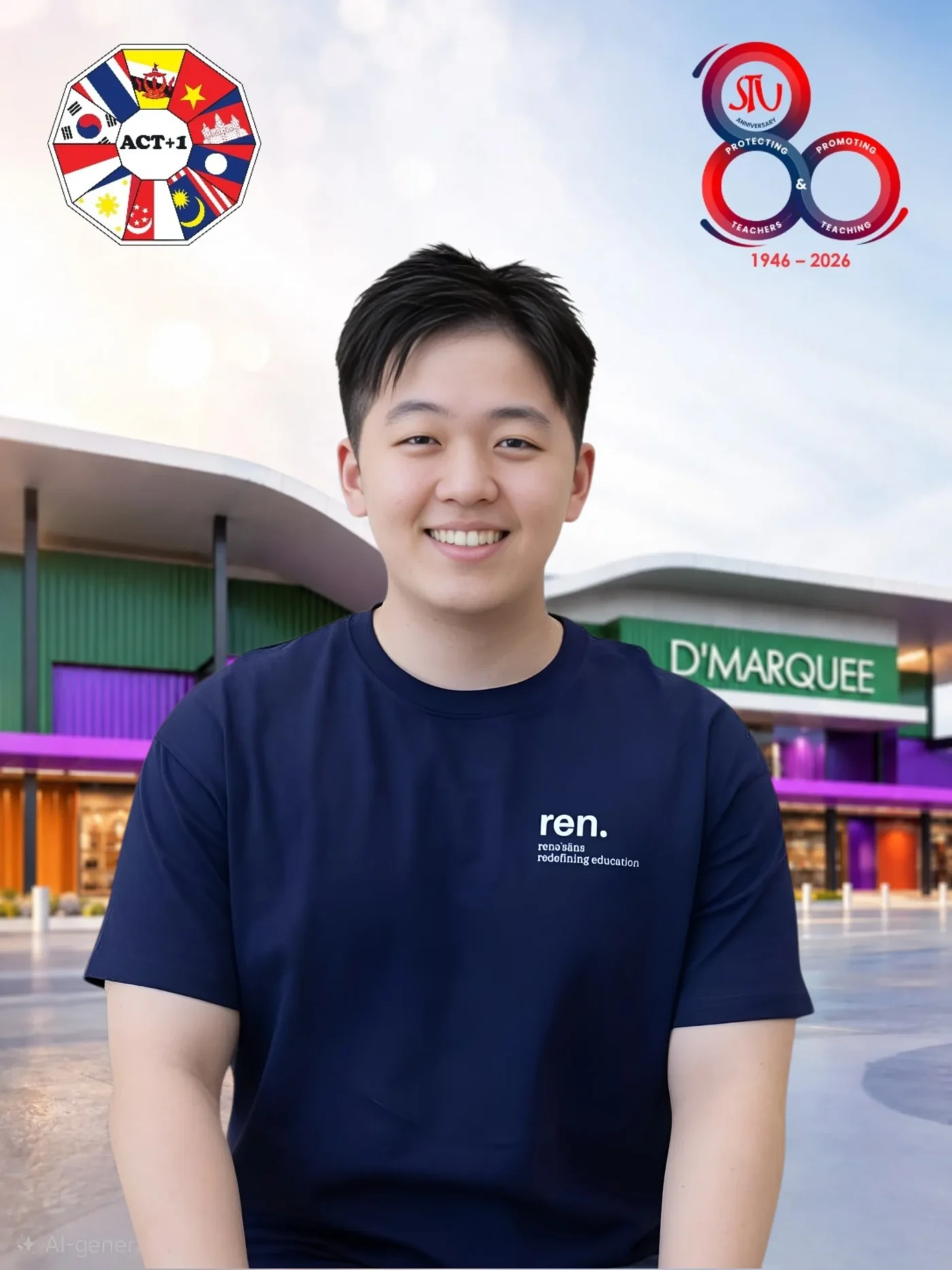
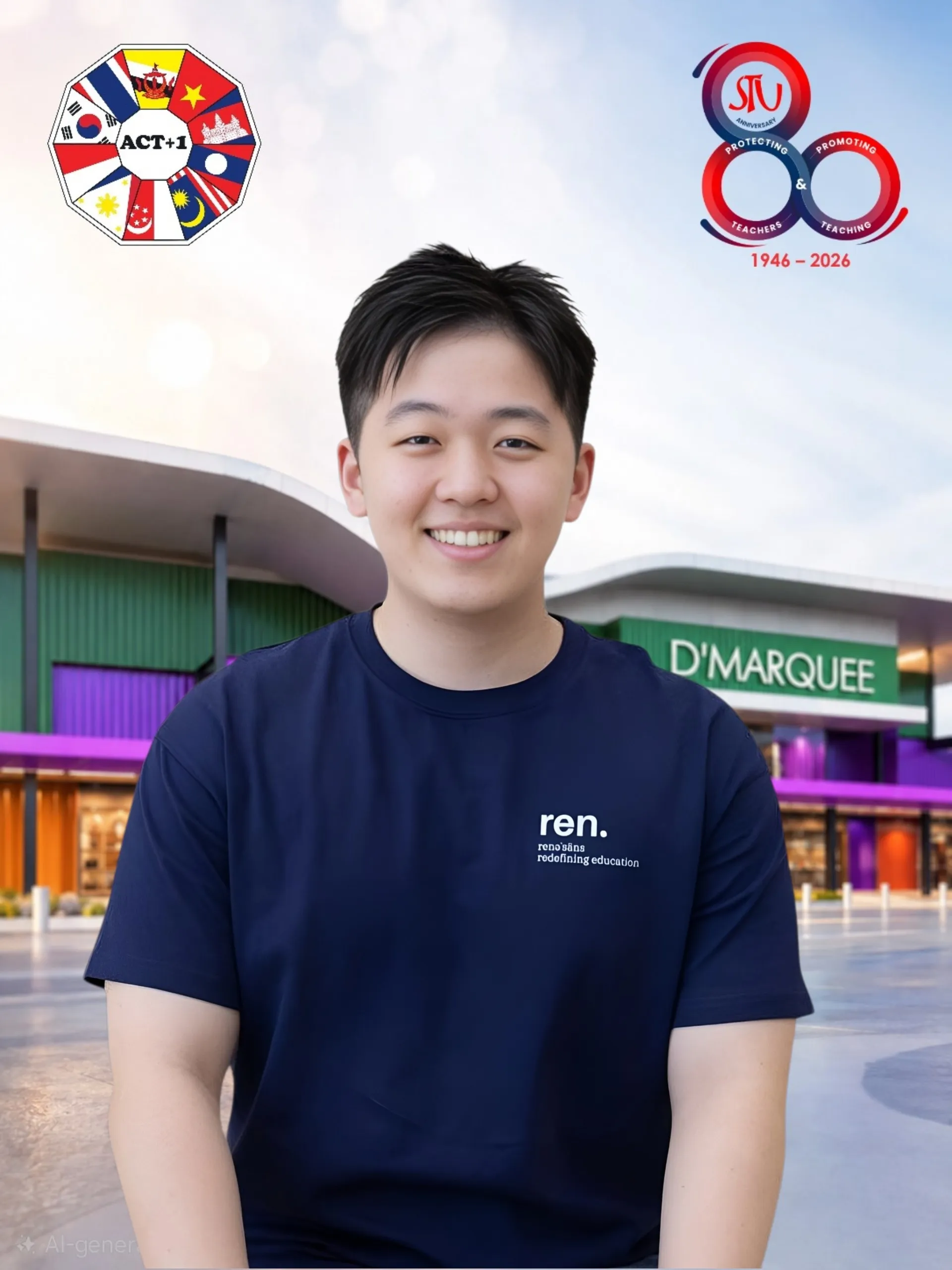
Wong Eu En is the CEO and Co-Founder of Ren Education, a Singapore-based edtech company building AI grading and analytics tools for schools and junior colleges. Eu En began as a General Paper tutor, running his own tuition academy from 2022. That experience - watching students fall behind not from lack of ability but from lack of timely, detailed feedback — became the founding insight behind ren. He is finishing his Bachelor of Computing (Computer Science) from NUS and continues to teach today, keeping one foot in the classroom as ren. grows. Ren Education's flagship product automates the marking of essays and structured questions with 98.4% benchmarked accuracy, returning rubric-aligned feedback to students and per-class analytics to teachers — reducing turnaround from weeks to a single day. The platform is now active across 12+ institutions, reaching 50+ teachers and over 5,000 students. Eu En's mission is simple: quality feedback should be a baseline for every student - not a luxury. Ren Education builds the ecosystem for teacher empowerment, not replacement in the age of AI.

Lesson Study on Teacher-Led AI-Supported Learning of Adaptations

Concurrent 1C Track 1

Concurrent 2A Track 1


This lesson study examined how intentional teacher-designed use of AI tools can deepen Primary 6 students’ understanding of adaptations in living organisms. The focus remained on helping students explain how structural and behavioural adaptations support survival, rather than memorising facts.

Ms Asmawati Bte Abdullah

Asmawati Bte Abdullah is a Lead Teacher in Science with more than 27 years of experience in education. She is passionate about nurturing student curiosity, critical thinking, and scientific inquiry through meaningful learning experiences that promote deep conceptual understanding and lifelong learning. As a teacher leader, she works closely with colleagues to enhance teaching and learning outcomes, championing the development of 21st Century Competencies, student agency, and inquiry-based approaches in science education. Her work includes leading professional learning, lesson study initiatives, and curriculum innovation to support both teacher growth and student development. At the school and zonal levels, Asmawati actively contributes to professional sharing sessions and networked learning communities, facilitating the exchange of effective science teaching practices. She is involved in designing engaging and challenging learning experiences for high-ability learners that foster deeper thinking and authentic problem-solving. Recognising the potential of educational technology to transform learning, she advocates for the purposeful integration of artificial intelligence in education. Through professional learning platforms, she has shared practical strategies for using AI tools and chatbots to support inquiry, personalise learning, and enhance classroom engagement. Through collaborative leadership, continuous learning, and a commitment to innovation, Asmawati strives to empower both educators and students to thrive in an evolving educational landscape.

Teacher as a Learning Architect

Concurrent 1B Track 1

Concurrent 2C Track 1

Imagine the future of the classroom, where teachers & students journey into imaginative worlds shaped by their diverse inputs, and brought to life through a strategic arsenal of GenAI tools, operating smoothly at speed and with almost no cost. The teacher steers control of the tools, ensuring ethical and responsible use amidst varied student suggestions.

As students have their voices heard and translated into multi-modal outputs, engagement is only heightened and personalised as everyone contributes building their stories and worlds together. The student-teacher bond develops naturally in the process.

You will learn how to:

1. Define clear outcomes (using backward design and A SMART goals)

2. Design inclusive learning experiences (using UDL scaffolds), and

3. Decide when and how AI tools can help: safely, ethically, and in culturally appropriate ways.

You will be equipped with ready to use templates and a checklist to keep you firmly in the driver’s seat.

Mr Liang Sea Fong

With 26 years of teaching experience, Sea Fong brings to the classroom a rich background in customer service and copywriting, as well as a strong foundation in the humanities. He holds a Bachelor of Social Science (with majors in Sociology and English Literature) from the National University of Singapore, and a Postgraduate Diploma in Education from the National Institute of Education, Singapore. Sea Fong has served as Head of Department (five years) and as a Senior Teacher (11 years). A progressive and collaborative teacher-leader, he is passionate about blending technology with impactful pedagogy to create engaging and dynamic learning experiences. Constantly seeking to innovate and grow, he actively shares his practices with fellow educators. In 2024, Sea Fong joined the ASEF Classroom Network 17 and collaborated with educators from Australia and Austria to explore the use of AI in climate education (Climate Alliance) —a project that earned the prestigious Gold Award for its innovative and impactful approach. In 2025, ASEF invited the team (Climate Alliance) to embark on EmpowerED where the team shared their experience with teachers from Bangladesh. Croatia, Malaysia and Mongolia.

Imagining the future of the classroom

Concurrent 1A Track 2


Imagine the future of the classroom, where teachers & students journey into imaginative worlds shaped by their diverse inputs, and brought to life through a strategic arsenal of GenAI tools, operating smoothly at speed and with almost no cost. The teacher steers control of the tools, ensuring ethical and responsible use amidst varied student suggestions.

As students have their voices heard and translated into multi-modal outputs, engagement is only heightened and personalised as everyone contributes building their stories and worlds together. The student-teacher bond develops naturally in the process.

By the end of the workshop, you will walk away with:

✅ A blueprint of bots primed to curate your specific lesson content in real-time, in minutes!

✅ More classroom time to impart the skills our students really need for the future: Critical discernment & Creative strategy!

✅ A system to track, in detail, the unique qualities and growth timeline of every student!

All these can be implemented into your classroom the next day!

The GenAI opportunity for educators is here! Seize it to command you more attention span and respect in your ecosystem, and a more motivated student community. Your strategic leverage of GenAI tools, coupled with delivering the most engaging of emotional experiences towards human-centric goals, are what will keep you irreplaceable.

Mr Ryan Nicholas Leong Wei Ren

Bullied and stricken with cancer, Ryan bounced back from physical and mental trauma, driving his desire to empower others even at a young age. In a fast-evolving BANI world, Ryan brands himself as a tech humanist - forging a future Renaissance where humanity and technology thrive harmoniously. He also serves as a passionate trainer for multiple education-based enterprises, having equipped 10,000+ youth, parents & professionals with 21st century life skills through his ambitious, energetic delivery style. Ryan’s strategically-honed expertise as an award-winning Youth Coach, Design Thinking Specialist and GenAI Consultant has also been referred to large-scale collaborations with local enterprises and large organisations such as Google.org, ASEAN Foundation and Samsung. He identifies and amplifies his audiences' strengths through mindsets of accelerated learning, compounding growth, and exponential impact. Ryan is obsessed with the future of education and in the classroom, where teachers & students journey into imaginative worlds shaped by their diverse inputs, and brought to life through a strategic arsenal of GenAI tools, operating smoothly at speed and with almost no cost. The teacher steers control of the tools, ensuring ethical and responsible use amidst varied student suggestions keeping themselves irreplaceable and above the grind.

Ryan Nicholas Leong Wei Ren

Bullied and stricken with cancer, Ryan bounced back from physical and mental trauma, driving his desire to empower others even at a young age. In a fast-evolving BANI world, Ryan brands himself as a tech humanist – forging a future Renaissance where humanity and technology thrive harmoniously. He also serves as a passionate trainer for multiple education-based enterprises, having equipped 10,000+ youth, parents & professionals with 21st century life skills through his ambitious, energetic delivery style.


Ryan’s strategically-honed expertise as an award-winning Youth Coach, Design Thinking Specialist and GenAI Consultant has also been referred to large-scale collaborations with local enterprises and large organisations such as Google.org, ASEAN Foundation and Samsung. He identifies and amplifies his audiences’ strengths through mindsets of accelerated learning, compounding growth, and exponential impact.

Ryan is obsessed with the future of education and in the classroom, where teachers & students journey into imaginative worlds shaped by their diverse inputs, and brought to life through a strategic arsenal of GenAI tools, operating smoothly at speed and with almost no cost. The teacher steers control of the tools, ensuring ethical and responsible use amidst varied student suggestions keeping themselves irreplaceable and above the grind.